
Creativity and Jung's Tension of Opposites
Jun 25, 2026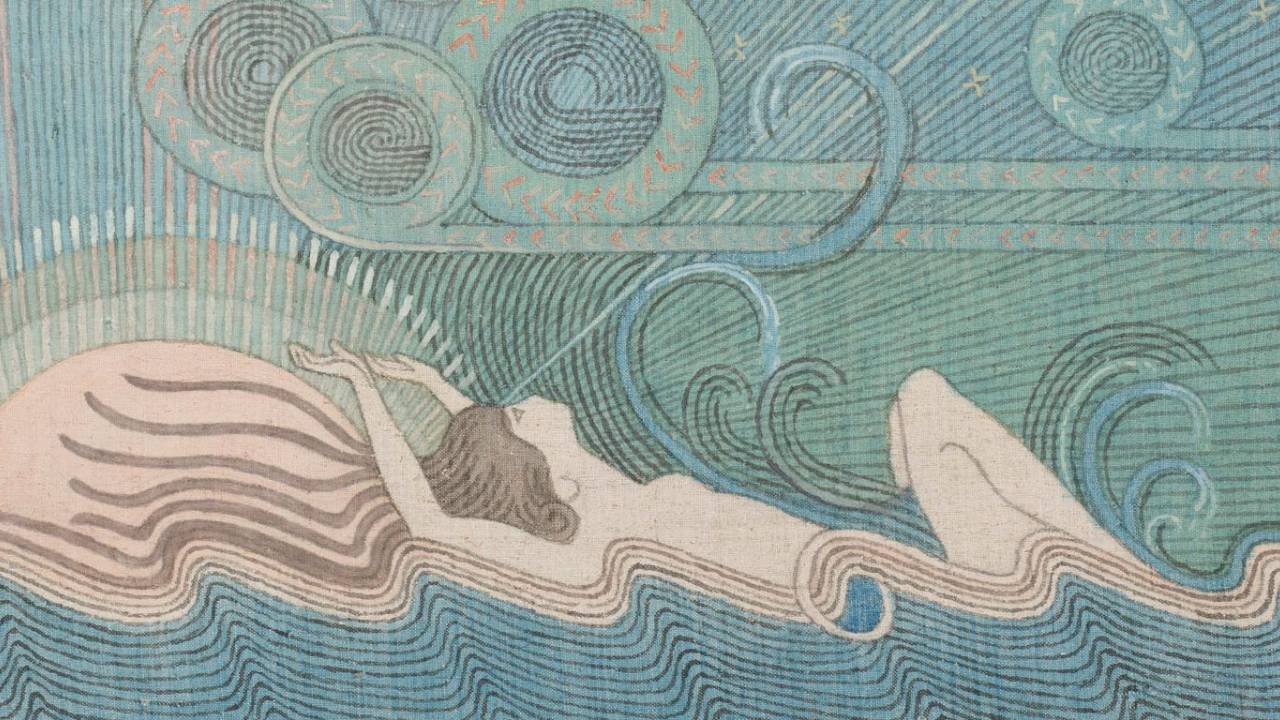
Our psyche consists of an infinite number of opposites. This idea that the psyche consists of polarities is central to Jungian psychology. And, of course, one of the biggest pairs of opposites within our psyche is the conscious and unconscious. What lies in the shadows of the unconscious is the counterpart of our ego consciousness.
This tension of the conscious and unconscious is what fuels psychological change and transformation. We need the friction of these polarities, because the energy of these contraries is what brings us to our greatest strengths and potentials. This tension is what creates energy or heat within the psyche. It's like rubbing two sticks together to create fire. Without enough tension in the psyche, there's not enough energy for us to grow and shift to a new perspective.
But in the psyche there's also this natural tendency towards wholeness, and that doesn't mean towards perfection, but towards balance. The experience and witnessing of the inner polarities works kind of like a pendulum which swings from one extreme to the other but then through the work and growth that happens with time, it slowly takes us towards equilibrium somewhere in the center. This path to the center of our psyche, or the Self, is what Jung called individuation.
Inside my program, Unveiling the Unconscious, we use creation myths to explore the collective nature and the patterns of creativity. These stories can tell us a lot about the fundamental aspects of how we create. A lot of the patterns that we find in creation myths are the same patterns that we find in the creative process.
For example, the way in which the separation of the whole into polarities acts as a catalyst of creation can be seen in the symbol of the egg, which cracks open to create the sky and the earth. The upper part of the egg becomes the sky and the lower part of the egg becomes the earth. This is a very common motif in creation myths and can be seen for example, in the Finnish epic called Kalevala:
Kalevala
Six, the golden eggs she lays there,
Then a seventh, an egg of iron;
Sits upon her eggs to hatch them,
Quickly warms them on the knee-cap
Of the hapless water-mother;
Hatches one day, then a second,
Then a third day sits and hatches.
Warmer grows the water round her,
Warmer is her bed in ocean,
While her knee with fire is kindled,
And her shoulders too are burning,
Fire in every vein is coursing.
Quick the maiden moves her shoulders,
Shakes her members in succession,
Shakes the nest from its foundation,
And the eggs fall into ocean,
Dash in pieces on the bottom
Of the deep and boundless waters.
In the sand they do not perish,
Not the pieces in the ocean;
But transformed, in wondrous beauty
All the fragments come together
Forming pieces two in number,
One the upper, one the lower,
Equal to the one, the other.
From one half the egg, the lower,
Grows the nether vault of Terra:
From the upper half remaining,
Grows the upper vault of Heaven;
From the white part come the moonbeams,
From the yellow part the sunshine,
From the motley part the starlight,
From the dark part grows the cloudage;
(Crawford, 1891, pp. 8–9)
Preceding the creative act, there is this time of brooding where these ideas and inspirations are just incubating within us. That phase of incubation, is as important part of the creative process as the act itself.
So the tension that these interpolarities create can be felt either as a conflictual one or it can be felt as a creative one. When the energy of the tension becomes creative, it results in what Jung called “the remarkable capacity for change of the human soul.” I think this is one of the reasons why creativity is so crucial to our well being - it allows an outlet of this inner tension, and a possibility to bring wholeness through experiencing these inner opposites. Jung believed that it was exactly this reconciliation of the opposite forces of the psyche that was the key to transforming the psyche.
He said that “out of the collision of opposites, the unconscious psyche always creates a third thing of an irrational nature, which the conscious mind neither expects nor understands. It presents itself in a form that is neither a straight yes nor a straight no.” This third thing that's created from the opposites is what Jung called the transcendent function, which is one of the core concepts of Jungian psychology. It's also the agent within us that leads the process of individuation, in other words, the process of becoming whole and unfolding our original potential. This process of individual individuation takes us closer to part of the psyche that Jung called the Self.
The self is the regulating center of the psyche and the archetype of wholeness, and often experiences of the self are accompanied by numinous characteristics. Jung even said tha, the Self might equally be called the “god within us”. Because of the irrational nature of the transcendent function, imagination has a large part to play in its activation. The result of the activation of the transcendent function is the symbol, and the symbol is where the conscious and the unconscious meet.
In a previous post I described the function of the inner critic and how to work with it. In the creative process, a part of being able to work with the transcendent function is the process of locating and understanding this inner critic. The reason for this is that when we do this, we find a possibility to open up to a more free and imaginative part of the unconscious to be uncovered and to be allowed expression. This is exactly what leads to the activation of the transcendent function as the healing agent of the psyche.
When we are creating or looking at an image, there may come a moment when an inner knowing arises intuitively, almost out of the blue. In such moments, we may experience the transcendent function at work: a sudden sense of clarity that might also be felt in the body and carries with it a deep certainty, even when we cannot yet put the experience into words. This may also be understood as an encounter with the Self which can emerge as an inner guide within the creative process.
If you feel drawn to explore the depth of your creative potential, I invite you to join me inside Unveiling the Unconscious. This online Jungian art program offers a guided path into the creative unconscious through direct hands-on experience and includes lots of personal guidance.
Stay connected:
Join my mailing list to receive news and updates.