
Surrendering to Creation: A Jungian Perspective on Creativity
May 18, 2026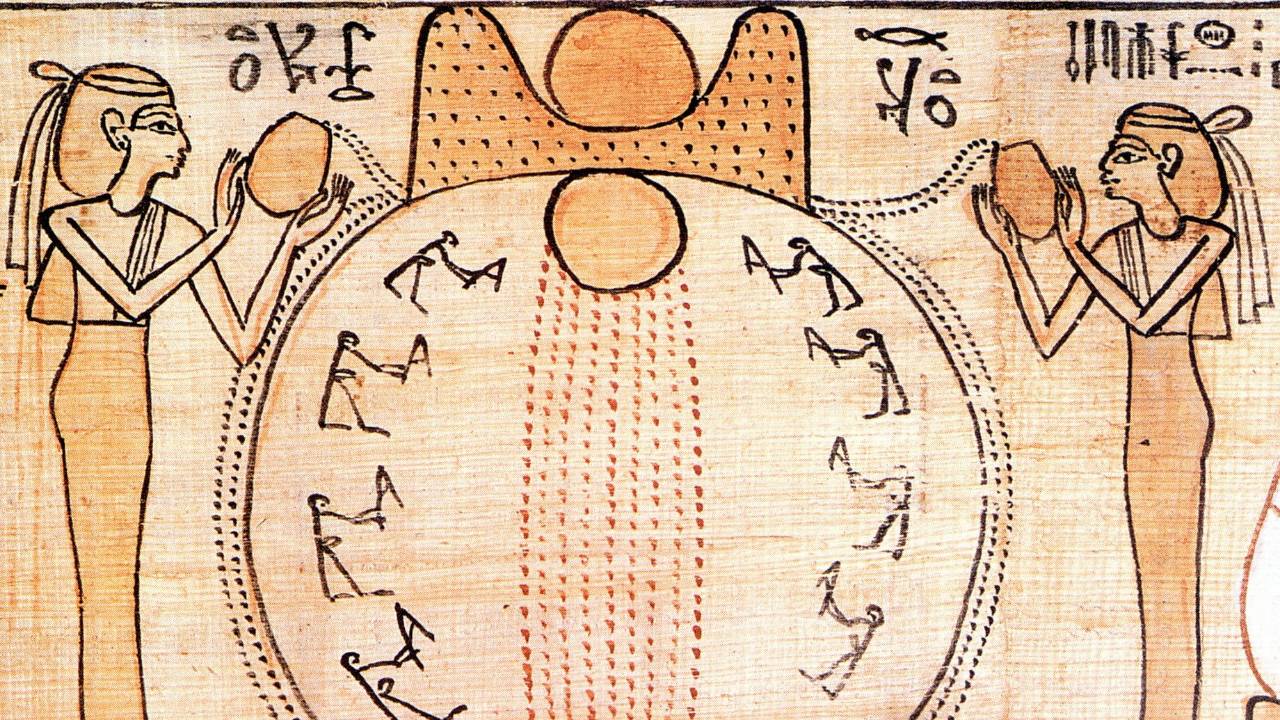
Creation myths describe how the world emerges from darkness, chaos or formlessness into order, and from a Jungian perspective, they can also be understood as symbolic expressions of the creative processes taking place within the psyche. Their recurring motifs reflect universal patterns of creation: the movement from unconscious potential into conscious form, the tension between opposites and the birth of something new. By exploring these myths, we can therefore gain a deeper understanding of creativity not simply as something we consciously direct, but as an autonomous process arising from the unconscious and moving through us.
The central figure in creation myths is the creator, often described as a god or spirit. This divine factor in creation invites us to consider the source of the creator within ourselves. If each element in a myth corresponds to something within the collective psyche, what might the creator represent within us?
When we become deeply involved in the creative process, we might sense the presence of something mysterious—something greater working through us. Creativity can bring us into a deeper relationship with the unconscious and, through it, with something sacred or divine. In this way, the creative process can become a path towards personal and spiritual growth.
Jungian analyst James Hillman speaks about the numinous quality of the creative drive and the way we become vehicles for expressing something that comes through us from beyond:
“It, (meaning creativity) is not a gift or a special grace, an ability, talent, or trick. Rather, it is that immense energy coming from beyond one's psyche, which pushes one to self dedication via one or another specific medium. Creativity impels devotion to one's person and it's becoming through that medium. It brings with it a sense of helplessness and increasing awareness of its numinous power.”
This idea of a creative source beyond the individual also appears in an ancient Egyptian creation story about Atum and Ptah.
Atum and Ptah
Atum is the creator of the world in Egyptian mythology. Ptah is Atum’s heart and tongue. So, at times in this story, Atum is mentioned, and at other times, Ptah.
The whole company of the Gods of Atum came out of his pots and from his fingers. On a potter’s wheel he made pots out of which came the Gods. The Gods are also the teeth and lips of his mouth, for he announces everything. The eyes see, the ears hear, the nose breathes the air, and through them all it comes to the heart, but it is the heart which makes every decision, and it is the tongue which repeats the thought of the heart. That is how Ptah created all the Gods. Every divine word is the thought of his heart and came from an order given by his tongue. He created the spirits of life and nourishment and food everywhere. He created what one likes and also what one hates. He gives life to those he likes and death to those who are condemned. Every work of art made by human hands were made by him. Legs and limbs move at his command.
(von Franz, 1995, pp. 133–134)
In this story, the heart receives and forms the creative thought, while the tongue brings it into expression. Creation begins within the divine source and moves through the body into the world. Even the works made by human hands are understood as expressions of this greater creative power.
This reflects the autonomous nature of the creative drive. Marie-Louise von Franz observed that, in creation myths, creation often appears as a sudden and autonomous event arising within the collective unconscious for no external reason. A god or creator suddenly feels the impulse to create the world. Creation begins with an impulse.
The unconscious is naturally creative. It can produce something new without an external reason or conscious plan. Jung described this living and autonomous quality of creativity:
“The creative urge lives and grows in him, the artist, like a tree in the earth from which it draws its nourishment. We would do well, therefore, to think of the creative process as a living thing implanted in the human psyche. In the language of analytical psychology, this living thing is an autonomous complex. It is a split off portion of the psyche, which leads a life of its own outside the hierarchy of consciousness. Depending on its energy charge, it may appear either as a mere disturbance of conscious activities, or as a superordinate authority, which can harness the ego to its purpose.”
Creativity, then, is not always something directed by the ego. It may begin as a tension, a disturbance, an inner conflict, or an impulse that asks something from us before we understand what it wants to become. At times, it may even feel as though the creative process has a will of its own. Our task is not necessarily to invent something through effort or control. It may be to listen, make space and allow ourselves to become the vessel through which creation takes form.
When we surrender to the creative source within us, we allow something larger than the conscious mind to participate in the process. Whether we understand that source as the unconscious, God, nature, a muse, or something sacred that cannot be named, we can learn to trust its movement through us. Creation is present in all of us, waiting for us to step aside and let it live.
Stay connected:
Join my mailing list to receive news and updates.