
How to Access the Depth of Your Creative Potential
Sep 22, 2026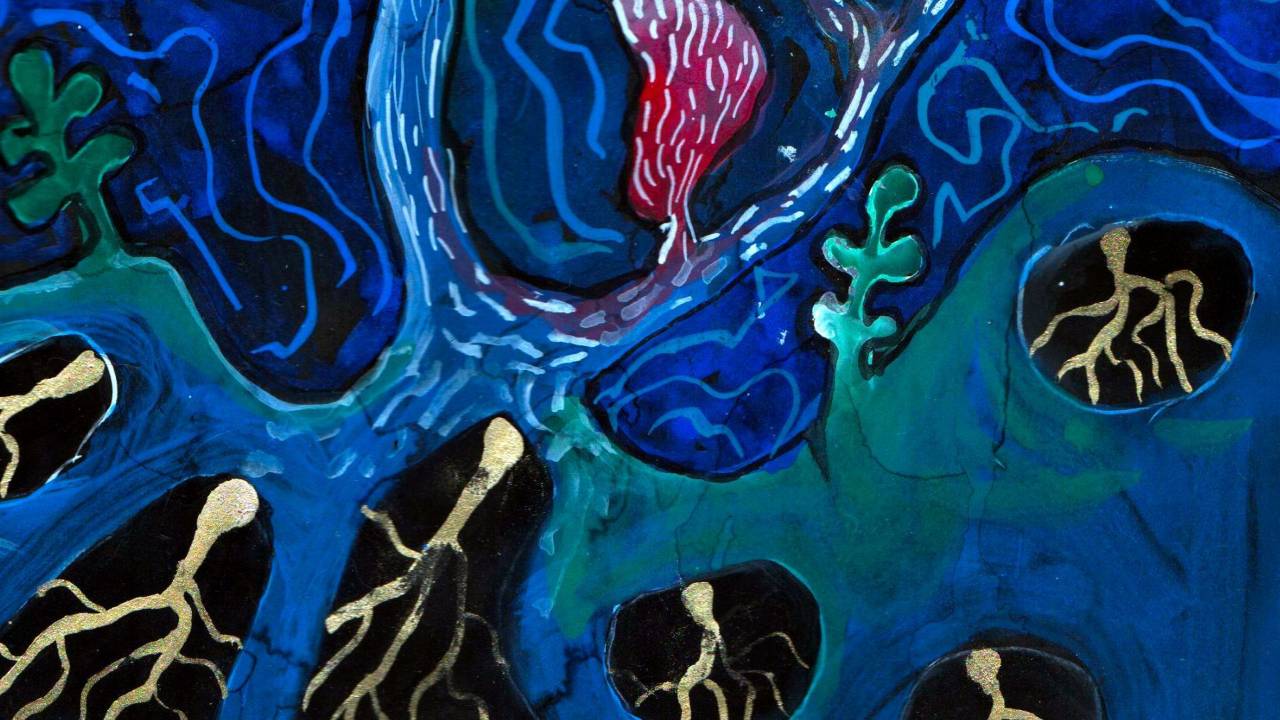
Creative potential is inherent in each of us. It is vivid, rich and alive, regardless of what we may think about our creative talents or skills. Yet we may not always know how to access it.
Perfectionism, procrastination, creative blocks and a harsh inner critic can limit our ability to connect with this creative energy—or prevent us from accessing it altogether. We may find it difficult to get out of our heads when we create, even though what we truly long for is to surrender to what is trying to emerge. We want to create with greater ease and confidence and feel connected to our authentic, soulful inner core in all its richness and colour.
I believe our relationship with creativity is deeply connected to our relationship with the unconscious. When we find greater depth within our inner lives and learn to listen to the unconscious, our creative energy can begin to emerge more organically. But before we can surrender to that energy, we first need to create the conditions in which it feels safe to appear.
Creating Safety Around Your Creative Expression
One of the most important things you can give yourself when you are trying to open up your creativity is a sense of safety. There are two kinds of safety involved in this process: the safety we experience around us and the safety we gradually build within ourselves.
External safety has to do with the environment in which we allow our creativity to become visible. Creativity means bringing something from deep within us into expression, and the safety we feel in expressing ourselves is connected to how deeply we are able to go.
When you begin creating more freely and intuitively, it is important to make intentional choices about who you show your work to. The people surrounding you should be able to meet your creative expression with gentleness, acceptance and curiosity rather than judgment. It can also be helpful to create alongside others who are going through a similar process of connecting with their creativity and unconscious life. This is one of the reason why I created my program Unveiling the Unconscious - to make this space available for people.
When our creative work is repeatedly met with understanding and acceptance, we can slowly begin to internalize the same attitude. We learn to look at what emerges from within us with more gentleness, and we begin to feel safer being visible through our creations.
Befriending the Inner Critic
The second form of safety is internal. It is connected to the ways we speak to ourselves and the thoughts that arise while we are creating.
We are often our own worst critics. Yet working with the inner critic is not about fighting against it, silencing it or trying to get rid of it completely. The inner critic is an inner companion that is trying to protect us. It has developed for a reason, and behind it there is often something vulnerable that needs our attention.
Instead of judging the inner critic, we can become curious about it. What is it protecting? What is it afraid might happen? What does it need in order to feel safe?
As we begin to understand the inner critic and enter into a dialogue with it, its grip can slowly start to unravel. We can become more accepting of ourselves, including the parts we might usually label as good or bad. This acceptance is an important part of feeling safe enough to express ourselves creatively. Over time, we can begin to trust ourselves and what is emerging from within us more deeply.
Becoming Present to Your Inner Richness
When we feel safe within ourselves, it also becomes easier to feel present within our bodies. We become more attuned to our senses, instincts and inner movements, and we feel safer responding to them.
Presence naturally grows from safety. When we no longer need to use so much energy to protect ourselves from judgment, we become more available to listen to what is emerging from within.
This presence is an essential part of creativity. It allows us to notice the inner richness that is already available and innate within us. Rather than forcing ourselves to invent something, we can become receptive to what is already moving through our bodies, feelings and imagination.
Understanding Your Creative Wounds
When we begin looking more closely at the inner critic, we often encounter the creative wounds it has been trying to protect.
We all have experiences that have shaped the way we relate to creativity. Perhaps you were not encouraged to express yourself creatively as a child, or you were discouraged from taking art seriously. You may remember being criticized by a parent, teacher or someone whose opinion mattered deeply to you. Sometimes a single painful experience—especially one that happened in front of other people—can remain with us for many years and block our creativity long after the original moment has passed.
Our creative wounds can also develop in a seemingly opposite way. Perhaps you were considered especially artistic or talented as a child. You may have received a great deal of encouragement or experienced success through your creativity at school, in competitions or in other settings.
Although this may sound entirely positive, it can sometimes create another kind of wound. Expectations begin to form around what we make, both from others and from ourselves. Our standards can become so high that it becomes difficult to create in a playful, free or even childlike way. The pressure to make something good can interrupt the natural flow of creation.
These wounds can become a kind of shield around our creative energy. As long as it does not feel safe to create, a part of us will continue trying to protect what is vulnerable. The richness of our creativity may remain locked behind that shield, almost as though it were being kept in a prison.
There is nothing wrong with this response. These blocks and protective patterns are deeply human, and most of us carry them to some extent. We do not need to judge our wounds or force our way through them. Instead, we can begin to understand where they came from and look at them from a new perspective.
Surrendering to the Unknown
As we develop greater safety, presence and understanding around our creative wounds, we become more able to surrender to the creative process.
Creativity asks us to step out of the way of an energy that is already flowing within us. We release the need to plan everything in advance and become open to whatever wants to emerge—whether it appears through painting, drawing, movement, writing or another form of expression. This surrender can feel frightening because creativity is a leap into the unknown. It requires us to be present with a certain kind of chaos.
We can see this reflected in creation myths from around the world. In many of these stories, chaos exists before the world comes into being. Symbolically, this reflects something important about the creative process: before something new can emerge, we often need to tolerate not knowing what it will become.
This is also where much of the mystery and joy of creativity can be found. When we allow the process to surprise us, something may appear that we could not have planned or consciously invented.
When I paint without knowing what I am going to create, the image gradually appears on the paper as I work. This can be an incredibly joyful experience because it does not feel as though I am consciously creating the image. It feels as though something deeper is emerging from within me, offering something I would not have been able to create through conscious thought alone.
Dreams provide a powerful example of this creative intelligence. We do not consciously construct our dreams, yet they can contain extraordinary scenes, stories, images and figures that we would never have been able to plan. Our dreams are evidence that a vivid creative imagination already exists within us.
Creating a Container for Surrender
Surrender does not mean entering into chaos without any boundaries. In fact, intentional limitations and containment can make it much easier to let go.
You can create a simple container by choosing a specific period of time in which to work, limiting the number of materials you use or selecting only a few colours. You might work on a particular size of paper or remain within one artistic medium. Similar boundaries can also be created around writing, movement or any other form of creative expression.
Ritual can offer another kind of container. Something as simple as lighting a candle before beginning and extinguishing it when you finish can create a symbolic boundary around the creative process. These actions may be very simple, yet they can powerfully support the feeling that there is a safe and intentional space in which you are allowed to surrender.
At first, this container may need to be quite small. Expecting yourself to surrender in a big way immediately can feel overwhelming. Instead, you can begin within boundaries that feel manageable and gradually expand them as your trust in the process grows.
It may sound counterintuitive, but surrender requires both freedom and structure. The creative process constantly moves between these opposing energies: structure and surrender, order and chaos, inspiration and frustration.
Staying With Creative Frustration
Even after we surrender to the process, there will inevitably be moments when we feel stuck or frustrated. Frustration is not a sign that the creative process has failed. It is part of the process itself.
There will be times of inspiration, uplift and optimism, followed by moments when nothing seems to be moving and we feel unable to find our way forward. Creativity asks us to remain present with both experiences.
If we can hold these opposing energies and ride the movement between them, we begin to develop greater depth in our creativity. The process can become like a spiral in which each experience of inspiration and frustration carries us deeper into ourselves.
The ability to stay with the process when it becomes difficult allows us to move beyond the surface. Rather than abandoning the work as soon as we feel uncertain, we learn to remain with what is unfolding until something deeper begins to reveal itself.
Deepening Your Relationship With the Unconscious
Accessing the depth of our creative potential is ultimately connected to the relationship we have with the unconscious parts of ourselves. Dreams, myths and symbolic images can help us enter this deeper realm because they speak to us through imagination rather than through conscious thought alone.
The unconscious contains an enormous creative richness. It is not something reserved for people who consider themselves naturally talented or artistic. It is a living source of imagination that exists within each of us.
Our task is not necessarily to create this potential, but to develop a relationship with it. We do this by creating safety around our expression, becoming curious about the inner critic, understanding our creative wounds and learning to tolerate the uncertainty of the creative process. We create enough structure to support surrender, and we remain present through both inspiration and frustration.
The creative imagination is already within you. When you are willing to listen to it, make space for it and give it your time, you can begin to access the depth, richness and aliveness that have been there all along.
If you feel drawn to explore the depth of your creative potential, I invite you to join me inside Unveiling the Unconscious. This online Jungian art program offers a guided path into the creative unconscious through direct hands-on experience and includes lots of personal guidance.
Stay connected:
Join my mailing list to receive news and updates.